
by Jeffrey C Kadlowec, Architect

Microalgae Cultivation
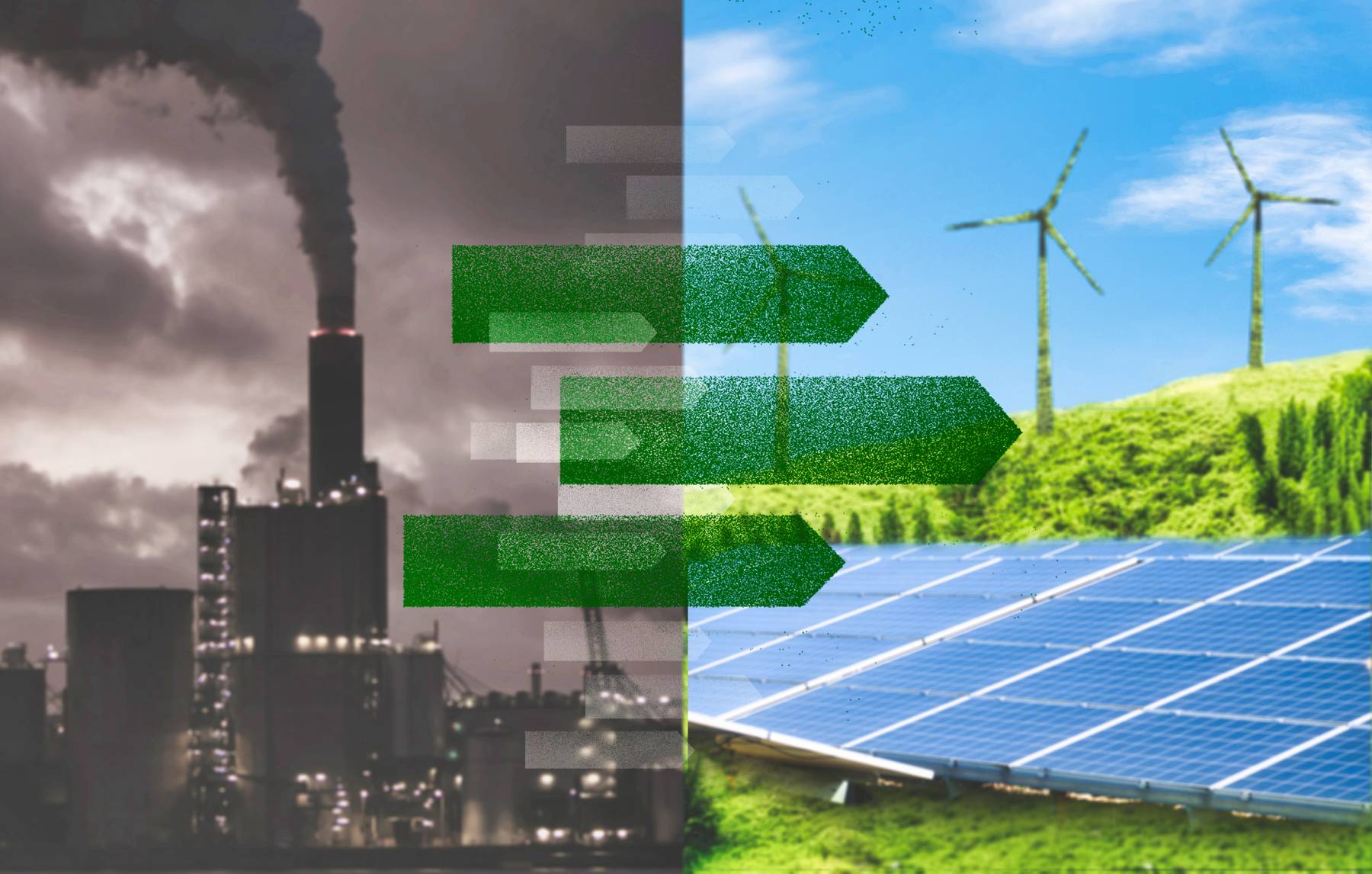
Preventing climate change, providing sustainable resources, and national security issues are all incentives for transitioning from fossil fuels to biofuels. Feedstock grown in deserts or non-agricultural land from drought resistant or salt-tolerant plants irrigated with seawater or municipal waste water would avoid conflict between food and fuel. Microalgae is the best oil producer, exceeding soy and palm by factors of 10 to 100. By comparison, approximately 72 acres of algae are required to replace the oil production of an average well (Trent 2010). Commercial growing of microalgae in shallow open ponds—raceways—or sealed enclosures—photobioreactors (PBRs)—yields high-value products including nutriceuticals, food additives, cosmetics and pharmaceuticals. Small-scale algae cultivation is economically viable, but biofuels become a low-value commodity at the scale need to meet current demands.
Photobioreactors
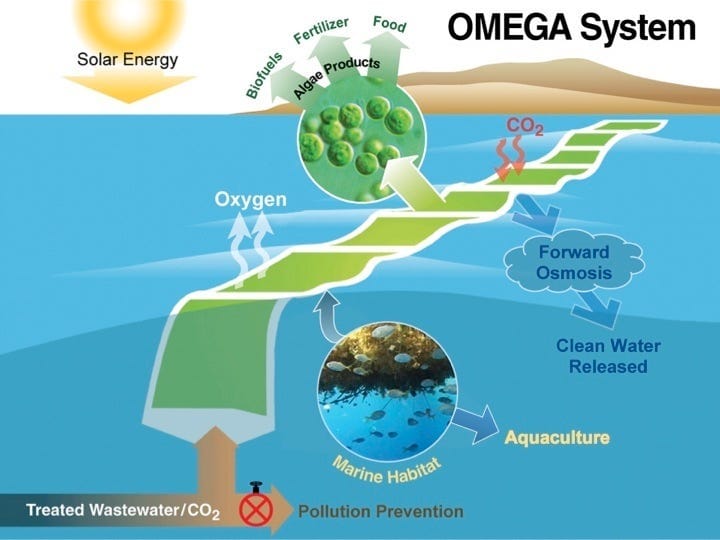
Offshore Membrane Enclosures for Growing Algae (OMEGA) are systems designed to grow freshwater algae from wastewater in protected pods attached to floating infrastructure. Anchoring apparatuses near treatment plants eliminates the need for pumping waste long distances while utilizing the water and nutrients and avoids competition with agriculture or disruption of urban infrastructure. Structures introduced into marine environments form artificial reefs or fish aggregating devices, increasing species diversity and expanding the food web (Wiley 2013). Microalgae cultivation could potential offset wastewater and carbon dioxide from coastal cities, transforming these waste streams into biofuels. Experimental prototypes will require enhanced hydrodynamics, optimized mixing and sophisticated controls to increase yields, improve EROI, and lower operating costs for deployment of dense configurations.
Impact of OMEGA
Microalgae has the most potential of any feedstock for biofuel when coupled with wastewater treatment (Harris 2013). Successful implementation requires overcoming formation of organic coatings, microfouling by bacteria, protists, and diatoms, and macrofouling from cyanobacteria and invertebrates. The natural light necessary to support algae growth also influences the quality and quantity of light penetrating PHBs. Biofouling increase drag, decreases buoyancy, impairs function, and accelerates corrosion and degradation, leading to significant cost from maintenance, repair or replacement of equipment.
Offshore and near-shore structures impact behavior and survival of marine birds and mammals, providing areas for resting, feeding and breeding while posing threat of noise, oiling, collision, entanglement, habitat fragmentation and changes in foraging (Hughes 2014). Large-scale deployment of OMEGA will have physical and biological impacts include changes in local circulation and wave patterns, sediment composition and accumulation rates, effects on local biodiversity and biomass, formation of artificial reefs and fish attracting sites, and eutrophication from removal of nutrients and contaminants. Given increasing needs for liquid fuels, microalgae remains a promising sustainable alternative to fossil oil.
References
Harris, Linden; Tozzi, Sasha; Wiley, Patrick; Young, Colleen; Richardson, Tra-My; Clark, Kit & Trent, Jonathan. (2013). Potential impact of biofouling on the photobioreactors of the Offshore Membrane Enclosures for Growing Algae (OMEGA) system. Bioresource Technology. 144: 420–428. dx.doi.org/10.1016/j.biortech.2013.06.125.
Hughes, Stephanie; Tozzi, Sasha; Harris, Linden; Harmsen, Shawn; Young, Colleen; Rask, Jon; Toy-Choutka, Sharon; Clark, Kit; Cruickshank, Marilyn; Fennie, Hamilton; Kuo, Julie & Trent, Jonathan. (2014). Interactions of marine mammals and birds with offshore membrane enclosures for growing algae (OMEGA). Aquatic Biosystems. 10: 3. www.aquaticbiosystems.org/content/10/1/3.
Trent, Jonathan; Embaye, Tsegereda; Buckwalter, Patrick; Richardson, Tra-My; Kagawa, Hiromi; Reinsch, Sigrid & Martis, Mary. (2010). Offshore Membrane Enclosures for Growing Algae (OMEGA): A System for Biofuel Production, Wastewater Treatment, and CO2 Sequestration. NASA Ames Research Center.
Wiley, Patrick; Harris, Linden; Reinsch, Sigrid; Tozzi, Sasha; Embaye, Tsegereda; Clark, Kit; McKuin, Brandi; Kolber, Zbigniew; Adams, Russel; Kagawa, Hiromi; Richardson, Tra-My; Malinowski, John; Beal, Colin; Claxton, Matthew; Geiger, Emil; Rask, Jon; Campbell, J Elliot & Trent, Jonathan. (2013). Microalgae Cultivation Using Offshore Membrane Enclosures for Growing Algae (OMEGA). Journal of Sustainable Bioenergy Systems. 3: 18-32. dx.doi.org/10.4236/jsbs.2013.31003.