
by Jeffrey C Kadlowec
Abstract
This paper explores implementation of renewable energy and the impact of energy transition in the built environment. Rapid urbanization and increase energy usage require adaptation towards sustainable development and improve energy efficiency. Governing policies with measurable targets promote these changes throughout multiple sectors. Investment in technology and infrastructure limits resource depletion and mitigates environmental degradation. Many challenges remain for the industrial and commerce due to cost and complexity, though the long-term benefits are well documented. Information technology provides many tools for analyzing and optimizing energy usage while improving performance and creating new opportunities. With increasing global awareness of climate change, social responsibility and environmental stewardship are becoming the main drivers behind technological innovation and systemic transformation.
Keywords: renewable energy, sustainable development, green building, greenhouse gas, climate change

1 Introduction
Energy availability drives socioeconomic progress for communities, making optimization and forecasting important factors in the planning and trade of a country (Rufuss 2025). Analysis of population, price and gross domestic product (GDP) variables provides accurate projections by source (eg: coal, oil, gas, electricity, wind, and hydro) and sector (eg: residential, commercial, industrial, and transportation) on regional, national and global scales. Energy return on investment (EROI) has become the measure of efficiency for energy sources and related technology, quantifying the ratio of usable energy acquired to the amount expended obtaining and using it. As more money is required, so is more energy; and to extract more energy, greater investment is needed.
2 Building Construction
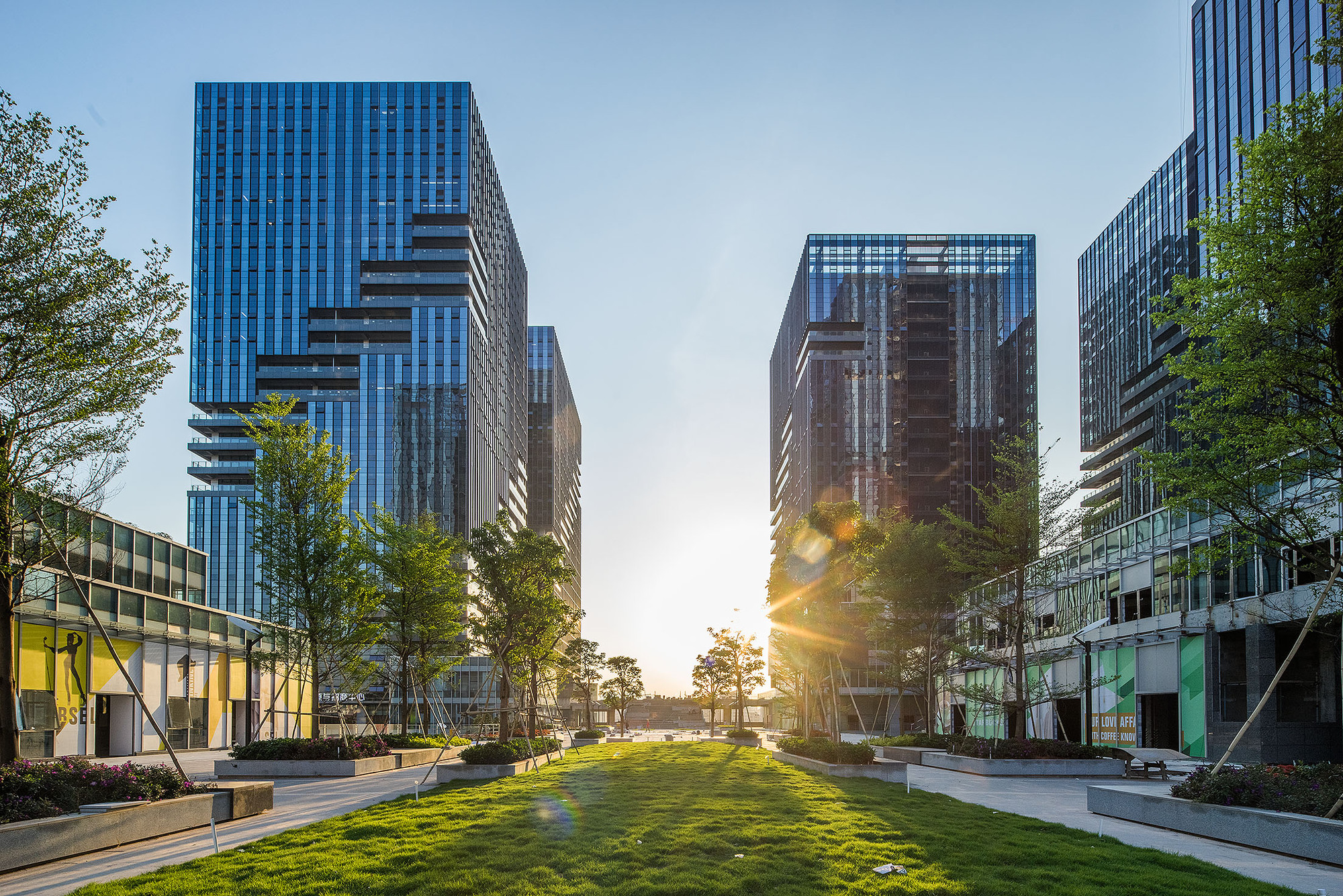
City living and urbanization have increased demand for multistory construction, as high-rise buildings accommodate growing population densities around the world (Gharehbaghia 2022). Innovative means, cost-effective methods, and sustainable materials are constantly being introduced to the architectural, engineering, and construction (AEC) industry. The most prominent trends are regarding energy, with reduction on consumption during construction and improvements in efficiency of materials, equipment and operation. Improving overall environmental quality while conserving water and resources remains the goal of green building technology over conventional practices.
Green building concepts appeared in the beginning of the 21st century, yet over twenty years later the construction industry has been slow to adopt these principles due to unfamiliarity with embodied energy and lack of knowledge in operations (Gharehaghia 2022). Accountability in green buildings involves three critical sustainability factors—environmental impact, economic capacity, and social influence. Certification systems, such as Leadership in Energy and Environmental Design (LEED) for the US, Building Research Establishment Environmental Assessment Method (BREEAM) for the UK, and Green Star in Australia, provide guidelines and strategies for reduction of greenhouse gas (GHG) emissions. These programs all promote financial benefits and positive effects for the community through sustainability.
Continual increases in energy consumption are being observed around the world; produced from non-renewable sources—coal, oil and gas, which is the main source of carbon dioxide (CO2) emissions through combustion processes (Wilk-Słomka 2025). Approximately 80% of energy costs for commercial buildings and 40–60% in residential is through heating, ventilation and air conditioning (HVAC). Modification to legislative systems with different parameters becomes the technical solution for significant reduction. Integration of renewable energy sources, including photovoltaics, can achieve almost net-zero consumption while still maintaining thermal comfort despite variable weather and climate conditions. Passive design, energy-efficiency, and emergency power ensure resilience of buildings.
The construction sector significantly impacts usage of non-renewable materials, available land, and embodied energy throughout the entire lifecycle of buildings from extraction to demolition. With growing awareness of environmental constraints and resource consumption, developed and developing nations are displaying greater support of energy efficiency and sustainability measures to enhance building performance and improve carbon mitigation (Pennacchia 2024). Conversion of existing buildings to high-performance structures can be achieve through implementation of renewable energy production, complete envelope enhancements, thermal distribution systems, and upgraded lighting fixtures. Energy modeling tools can be used to identify possible solutions and calculate the economic savings over net present value (NPV).
Building management equipment can be utilized for monitoring and controlled operations of environmental comfort, safety and security. Inhabitant density, occupant behavior, and user participation in energy-efficient strategies can have significant impact on building performance (Bungau 2023). Smart-enabled buildings incorporate multiple systems to optimize energy usage while preserving comfort through automated control of temperature, humidity and illumination. Government policies, initiatives and regulatory systems are an essential part of sustainable practices and energy transition. Specific efficiency requirements are implemented for new construction and major renovations by enacting energy codes and design standards. By working directly with enterprises, financial incentives, grants and subsidies encourage sustainability measures in construction.
3 Development Policy
Energy demands of modern economies are expected to increase, creating climate risk and political tension. While crucial for growth, development and well-being, energy security becomes a strategic issue for policymakers. Affordable, reliable and uninterrupted power is vulnerable to geopolitical risks and the process of transitioning to sustainable sources (Yenisehirlioglu 2026). The intense energy demands of growing economies increase resource consumption, creating further security risks. Improving energy efficiency and adopting renewable energy policies are the two main ways of addressing this problem. Innovations in clean energy technology and the impact of rapid urbanization must be considered in detail.
Growing concerns regarding climate change, global warming and environmental disasters cause by GHG emissions from heavy reliance on hydrocarbons has led to greater efforts in developing policies to address energy consumption and related issues. The 2020 European Climate & Energy Package and 2030 Climate & Energy Framework target energy efficiency, renewable transition, and reduction in emissions to reach carbon neutrality by 2050. The Emissions Trading System (ETS) reduces GHG from power and industry, the Renewable Energy Directive (RED) binds nations to renewable energy, the Energy Efficiency Directive (EED) promotes energy efficiency, and the Energy Performance of Buildings Directive (EPBD) improves energy performance (Scelzaa 2025).
Population growth, economic development and improved standards of living have led to steady an increase in GHGs and rising average temperatures. Combustion of fossil fuels remains the primary contributor of CO2 emissions. Achieving carbon neutrality requires improvement of urban energy efficiency through technical advancements. Mitigation of climate change demands a transformative shift towards substantial reduction and renewable energy (Tian 2025). The United Nations Framework Convention on Climate Change (UNFCCC) documented an 40% increase since 2015 for international collaboration on renewable energy projects. The International Renewable Energy Agency (IRENA) reported global investment in renewable energy at 303.5 billion USD in 2021. The renewable energy sector employed over 12 million people globally in 2021 according to the Renewable Energy Policy Network. The International Energy Agency (IEA) estimates renewable energy technologies could reduce global carbon emissions 12% by 2050.
Energy transformation is the result of sustainable initiatives and innovative technology in response to global awareness of the need to reduce reliance on fossil fuels. The United Nations (UN) established the 2030 Agenda for Sustainable Development in 2015 with 17 goals to end poverty, reduce inequality, improve health and education, and increase economic growth while addressing climate change and preserving the environment. The World Commission on Environment and Development (WCED) defines sustainable development as, “…development that meets the needs of the present without compromising the ability of future generations to meet their own needs…” (Yfanti 2026). Progress towards these goals strengthens circular economies, renewable technologies, and energy efficiency. Without energy planning that incorporates social and technical judgement, countries risk encountering unpleasant and unmanageable situations in the future.
4 Capture and Delivery
Sustainable development to manage environmental quality and preserve natural resources can be achieved through knowledge, technology and investment. Environmental degradation and resource depletion erode economic advancement and result in negative social implications. Sustainable energy seeks a balance in energy development, economic growth, and environmental preservation. Policy strategies should ensure energy security and mitigate climate change through energy saving and improving efficiency (Ayorinde 2024). Environmental conservation driven through economic innovation improves welfare of citizenry by promoting good indoor quality, better health care, and a more inclusive society.
Solar energy generation from off-grid arrays benefits customers by providing lower electricity costs. Community solar programs provide access to customers without the necessary resources or optimal energy conditions, without the land impact of utility-scale solar farms (Pham 2024). A well-developed photovoltaic supply chain allows for communities to transition away from traditional coal and natural gas sources through an innovative approach. The economic impact of construction, operation and management includes the installation of each project and the long-term benefit over its lifespan. As solar power expands and fossil fuel consumption declines, employment is expected to shift between sectors rather than create new jobs, though the construction phase will have a significant impact on job creation and local economies.
Environmental and economic sustainability depends upon accurate energy forecasting, especially in subtropical climates where greater operational demands are common due to higher temperatures and greater humidity. Heating, ventilation and air conditioning (HVAC) for cooling and dehumidification contributes significantly to energy usage (Balbis-Morejón 2026). Modernization of HVAC systems through renovations and retrofit work can significantly improve building performance and the competitiveness of aging stock. Although the growth of artificial intelligence (AI), large language models (LLM), and data centers come with an intense energy demand and carbon footprint, these tools have potential to improve energy-efficiency across many industries. Advance machine learning provides opportunities to enhance energy management through algorithmic predictions and analysis of non-linear behavior.
Energy consumption drives economic growth while causing global warming and environmental degradation. Data centers that support manufacturing, the internet, and AI technology are energy-intensive and remain in continuous operation. The International Energy Agency (IEA) projects the global consumption by data centers in 2030 will be 945 terawatt-hours, equivalent to the current annual power use of Japan (Song 2025). Data centers also generate significant amounts of waste and GHG emissions, thereby requiring further integration of energy efficiency and renewable energy. Green Total Factor Energy Efficiency (GTFEE) can be improved primarily through Industrial Structure Upgrading (ISU) and Green Technology Innovation (GTI).
5 Usage and Storage
Shifting towards low-carbon and net-zero energy is a major opportunity for societal advancement. Dwindling fuel reserves, rising social pressure, and recent technological advancements are leading developed countries to increasing investment in renewable energy. This gradual change requires rethinking energy utilization on global, national and individual levels; as an environmental initiative, a catalyst for industrial growth, and factor of economic competitiveness (Horzela-Miś 2025). Environmental benefits are well-documented, though significant challenges remain for adoption by the commercial and industrial sectors due to higher costs and complexities. With increasing energy production and the transition to renewable energy, storage solutions are an integral part of the energy economy. Economic feasibility and profitability are the main hurdle when analyzing return on investment (ROI) and the long-term benefit of integration.
Population growth, urbanization and industrial activity consume increasing amounts of energy, with fossil fuels comprising 80% of global demand for oil, coal and natural gas in 2021. The IEA projects this number to rise 24% by 2040 through its Stated Policies Scenario (Horzela-Miś 2025). Alternative energy sources and better storage solutions are required to limit rising CO2 emissions. Lithium-ion batteries, pumped hydro, and hydrogen storage reduce intermittency of renewables and ensure stable energy supply. Energy storage improves efficiency, increases independence, and lowers emissions while ensuring operations and grid reliability. International collaboration through greater investment and policy support are essential in transition towards an equitable and sustainable future.
Heat storage technology is emerging as another critical component to manage variable and intermittent nature of sustainable energy. Flexible storage and release of thermal energy balances loads and ensures reliability (Kassem 2025). Portable photovoltaic-thermal (PVT) systems with shape-stabilized phase-change materials (PCMs) utilize charcoal and metallic flakes to improve efficiency and energy recovery through denser and more compact systems to leverage absorption and release during phase transition. Advanced materials and nanotechnology offer further potential for improving heat storage systems.
6 Economic Incentive
The UN Urbanization Prospects Report projects that nearly 70% of the world population will reside in urban centers by 2050. Governing policies must be developed and implemented to meet rising demands and reduce environmental impact. Energy economic principles (EEPs) promote energy efficiency in building and transportation systems through renewable sources, energy conservation, and performance enhancements throughout the construction industry (Oke 2023). Optimized building design with energy-efficient equipment, advanced insulation materials, and smart management systems reduce energy consumption and lower operational costs over the lifecycle of buildings. Government policies and regulations along with economic growth and job creation are the highest-ranking drivers, followed by environmental sustainability, energy cost saving, and ROI.
Traditional models of economic development are not sustainable over the long-term due to increasing use of resources that produce harmful emissions. The European Union (EU) seeks a green, resource-efficient, and competitive low-carbon economy through new governance that transcends boundaries and engages society and businesses (García‑Álvarez 2023). Integrating production and consumption systems could achieve that goal while addressing environmental degradation. Energy remains the essential component towards that sustainable development.
Proposals have been introduced to revise existing legislation with stricter reduction in construction, transportation, industry and agriculture; more ambitious renewable energy usage; greater energy efficiency; clean energy fuels; lower CO2 emissions; an emissions trading system; and an energy taxation directive (García‑Álvarez 2023). Energy tax policies have a positive impact, resulting in more efficient energy production and usage but without significant reduction in consumption. Supply policies do however influence sustainable energy consumption patterns, though electricity generating companies have not had a substantial effect in promoting clean energy.
7 Information Technology
Construction is responsible for approximately 25% of global waste, significant energy consumption, and environmental degradation. Multi-criteria certification is one solution to reduce energy consumption with LEED and BREEAM being the prevalent systems. According to the UN, the world population will exceed 9.7 billion by 2050—primarily in urban areas (Piętocha 2025). High-rise buildings are predicted to be the dominate type, constructed of concrete, steel and glass. Sustainable design seeks to reduce the negative impacts of related building construction. Life-cycle assessment, when used in planning and focused on GHG reduction, can calculate CO2 balance. Prefabricated components, recycled building materials, and optimized reinforcement create circular economies. Renewable energy systems, circular design strategies, and façade optimization minimize environmental impact and reduce energy consumption.
“Smart Cities” are emerging from the application of building information modeling (BIM) and artificial intelligence (AI) technology in the AEC sector through rapid digitization to improve operations and efficiency. Managing building information allows for interactive coordination and collaboration of project data throughout the life cycle to adapt processes and determine policies. Benefits include reduction in project time, cost, errors, omissions, rework, and safety risks. The goal of sustainability is to design, construct, operate, maintain, and dismantle buildings with less disruption, fewer resources, and not destroying ecosystems (Li 2024).
8 Conclusion
Accelerating climate change is worsening food insecurity, causing related displacement, and resulting in economic losses and instability. GHG emissions increased 1.3% from 2022 to a record high of 5.71 gigatons of CO2 in 2023 (see Fig 1). The global average temperature was 1.55° C above pre-industrial levels in 2024—the hottest year in last two centuries (see Fig 2). Reaching the target for affordable and clean energy of the 2030 Agenda for Sustainable Development demands greater investment, particularly in developing countries (UN 2025). International financial support increased 27% from 2022, accounting for $21.6 billion in 2023 (see Fig 3). Deployment of renewable energy across sectors and significant improvement to energy efficiency are required to meet climate targets and net-zero emission.

Figure 1. Greenhouse Gas Emissions (UN 2025)

Figure 2. Average Global Temperatures (UN 2025)

Figure 3. International Financing (UN 2025)
Sustainable development remains a major challenge for the modern globalized economy with increasing complexity and a multidimensional framework. Advances in technology and innovation, changes in production and consumption, and systemic transformation of public policy are key factors from both a micro and macroeconomic perspective (Wo´zniak 2026). An increasing amount of research combines theoretical and empirical data to identify dominant trends and scientific gaps between renewable energy and development goals. Principles of social responsibility, fairness and equality emphasize the importance of countering climate change, protecting the environment, and respecting human rights. Understanding the cost-benefit of implementation of technology and approaches to resource management are vital in this evolving field of knowledge. Research of sustainable development goals (SDG) finds renewable energy and a clean ecosystem as the highest priorities.
References
Ayorinde, Emmanuel. (2024). Environmental Conservation Attributes Influencing the Adoption of Sustainable Energy Delivery: A Confirmatory Factor Analysis Approach. Journal of Construction Project Management and Innovations. 15(1), 13-22. doi.org/10.36615/jcpmi.v15i1.3432.
Balbis-Morejón, Milen; Cabello-Justafré, Oskar; Cabello-Eras, Juan; Hernández, Javier; Rey-Martínez, Francisco; Elgharib, AO & Salem, Khaled. (2026). High-Accuracy Energy Forecasting for Sustainable Hospitality: A Hybrid Ensemble Machine Learning Approach to 50-Year Retrofit Analysis in Sub-Tropical Hotels. Sustainability. 18, 2307. doi.org/10.3390/su18052307.
Bungau, Constantin; Prada, Francesca; Bungau, Tudor; Bungau, Constantin; Bendea, Gabriel & Prada, Marcela. (2023). Web of Science Scientometrics on the Energy Efficiency of Buildings to Support Sustainable Construction Policies. Sustainability. 15, 8772. doi.org/10.3390/su15118772.
García‑Álvarez, María; Pineiro‑Villaverde, Gustavo & Soares, Isabel. (2023). Renewables, taxes and competitive markets: the role of energy policies on the EU’s sustainable energy consumption. Environment, Development and Sustainability. 27, 24225–24246. doi.org/10.1007/s10668-023-03891-w.
Gharehbaghia, Koorosh; Farnesa, Ken; Kucharskib, Lada & Fragomenic, Sofia. (2022). The adaptability of evolving green high-rise construction: embodied energy dynamics in Australian high-rise buildings. International Journal of Sustainable Energy. 41(10), 1383–1398. doi.org/10.1080/14786451.2022.2052291.
Horzela-Miś, Anna & Semrau, Jakub. (2025). The role of renewable energy and storage technologies in sustainable development: simulation in the construction industry. Frontiers in Energy Research. DOI 10.3389/fenrg.2025.1540423.
Kassem, Mukhtar & Moscariello, Andrea. (2025). Exploring heat storage: innovations, risks, and future directions for sustainable energy. International Journal of Sustainable Energy. 44(1), 2513328. doi.org/10.1080/14786451.2025.2513328.
Li, Jinyi; Liu, Zhen; Han, Guizhong; Demian, Peter & Osmani, Mohamed. (2024). The Relationship Between Artificial Intelligence (AI) and Building Information Modeling (BIM) Technologies for Sustainable Building in the Context of Smart Cities. Sustainability. 16, 10848. doi.org/10.3390/su162410848.
Oke, Ayodeji; Aliu, John; Ebekozien, Andrew; Akinpelu, Taiwo; Olatunde, Tosin & Ogunsanya, Oluwabukunmi. (2023). Strategic drivers for the deployment of energy economics principles in the developing construction industry: A Nigerian perspective. Environmental Progress & Sustainable Energy. 43, e14351. DOI: 10.1002/ep.14351.
Pennacchia, Elisa; Romeo, Carlo & Zylka, Claudia. (2024). Towards High-Efficiency Buildings for Sustainable Energy Transition: Standardized Prefabricated Solutions for Roof Retrofitting. Sustainability. 16, 3850. doi.org/10.3390/su16093850.
Piętocha, Anna & Koda, Eugeniusz. (2025). Sustainable Design and Energy Efficiency in Supertall and Megatall Buildings: Challenges of Multi-Criteria Certification Implementation. Energies. 19, 133. doi.org/10.3390/en19010133.
Pham, Tuyen; Bone, Clara & Jolley, Jason. (2024). Assessing the Economic Impacts of Sustainable Energy: An Analysis of Ohio’s Community Solar Program. Sustainability. 16, 9436. doi.org/10.3390/su16219436.
Rufuss, D D W; Ashritha, K S S & Suganthi, L. (2025). Green energy revolution: A unique approach for energy forecasting and optimization towards sustainable energy planning and social development. Environment, Development and Sustainability. 27, 27143–27170. doi.org/10.1007/s10668-024-04826-9.
Scelzaa, Serena; Costaa, Valentina; Delpontea, Ilaria & Schenoneb, Corrado. (2025). Shaping Europe’s sustainable energy policy: what the first decade of Covenant of Mayors tells us about future perspectives. International Journal of Sustainable Energy. 44(1), 2527086. doi.org/10.1080/14786451.2025.2527086.
Song, Zihan; Chen, Li & Jia, Manli. (2026). Toward a sustainable energy future: Can green data center construction promote energy efficiency? Energy Reports. 15. doi.org/10.1016/j.egyr.2026.109166.
The Sustainable Development Goals Report. (2025). United Nations: Department of Economic and Social Affairs. New York, NY. unstats.un.org/sdgs/files/report/2025/2025-updates.pdf.
Tian, Ze; Zhang, Han-qi; Ren, Fang-rong; Xu, Xing-wu & Liu, Xiao-yan. (2025). Sustainable energy efficiency in China from the perspective of environmental development: A comprehensive analysis of regional disparities and policy implications. Energy & Environment. 36(6), 3039–3066. DOI: 10.1177/0958305X241233736.
Yenisehirlioglu, Emirhan; Tarla, Esma & Bayat, Tayfur. (2026). Drivers of Energy Security Risks in the European Union: Implications for Sustainable Energy Policy. Sustainability. 18, 2859. doi.org/10.3390/su18062859.
Yfanti, Sofia; Syntichakis, Stelios; Condaxakis, Constantinos; Karapidakis, Emmanuel; Stavrakakis, George & Katsaprakakis, Dimitris. (2026). Energy Transition Governance and Sustainable Development on a Mediterranean Island: From Policy Design to Local Action and Global Impact. Energies. 19, 1801. doi.org/10.3390/en19071801.
Wilk-Słomka, Beata; Belok, Janusz & Orlik-Ko˙zdo, Bo˙zena. (2025). The Impact of Changing Climatic Conditions on the Solutions Used in a Low-Energy Building—Case Study. Sustainability. 17, 10504. doi.org/10.3390/su172310504.
Wo´zniak, Agnieszka; Ciuła, Józef; Kochanek, Anna & Guzal-Dec, Danuta. (2026). Renewable Energy as a Strategic Mechanism for Achieving the Sustainable Development Goals: A Bibliometric Review. Energies. 19, 1201. doi.org/10.3390/en19051201.