
by Jeffrey C Kadlowec, Architect

Toxics Release Inventory
The Toxics Release Inventory (TRI) covers chemicals that cause cancer or chronic health conditions, have significant adverse effects, or result in substantial environmental damage. There are 810 chemicals currently listed by the Environmental Protection Agency (EPA) in the TRI under 34 categories. The Occupational Safety and Health Administration (OSHA) publishes a simpler list of known carcinogenic chemicals. Persistent Bioaccumulative Toxic (PBT) chemicals and polyfluoroalkyl substances (PFAS) are of special concern because they are not easily destroyed, build up in body tissue, and remain in the environment for extended periods (EPA 2026).
Increasing the use of information provisions has been the focus of many researchers in law and policy implementation as alternatives to traditional command and control regulations. Much of the current research quantifies observation and analysis of exposure types and pollution decisions by community characteristics and geographical area, with less research exploring the relationship between chemical plants and reduction of toxins (de Marchi 2006). Large differences appear based on income, education and voter turnout, correlating to region, race and risk. The Emergency Planning and Community Right-to-Know Act of 1986 (EPCRA) states that plants “may use readily available data” or “reasonable estimates of amounts,” but are not required to monitor or measure beyond required provisions.
Food Manufacturing
With evolving consumer preferences and more stringent safety regulations, food manufacturers must continuously innovate, ensure compliance, and maintain competitiveness while focusing on sustainable development. Enhancing supply chain management is central in these efforts and has a pivotal role in operations. Companies in the food industry seek a balance in economic prosperity, social responsibility and environmental stewardship (Grant 2003). Low-carbon initiatives and reduction of emissions are the result of a growing awareness in climate change. Globalization, along with uncertainties caused by disasters and epidemics, further illustrate the need for resilient supply changes.
Sustainable Food System
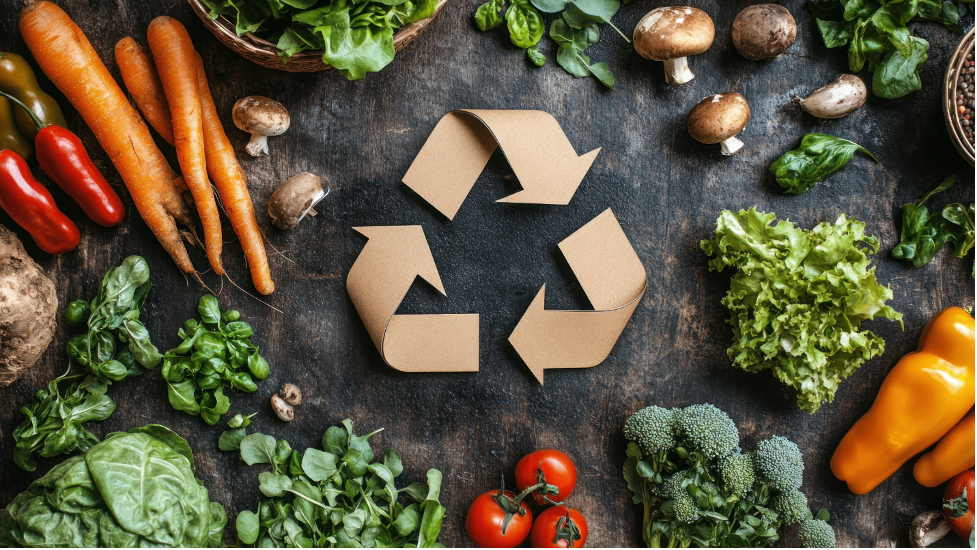
Food manufacturing has become a major contributor to ecosystem degradation, greenhouse gas production, and public health concern. Conventional linear models do not adequately represent system dynamics or related socioeconomic and environmental consequences (Lever 2021). Development of circular food economies to improve food security in city-regions are dependent upon regional innovation and state power through global value chains. Aligning industrial and biological ecosystems towards symbiosis could be particularly influential at closing material loops by fostering sustainable development. Transforming the food system will require a focus on action-based research and policy interventions to minimize waste and create more resilient economies.
References
de Marchi, Scott & Hamilton, James T. (2006). Assessing the accuracy of self-reported data: an evaluation of the toxics release inventory. J Risk Uncertainty, 13: 57-76. DOI 10.1007/s10797-006-6666-3.
Grant, Don & Jones, Andrew. (2003). Are Subsidiaries More Prone to Pollute? New Evidence from the EPA’s Toxics Release Inventory. Social Science Quarterly, 84(1).
Lever, John & Sonnino, Roberta. (2021). Food system transformation for sustainable city-regions: exploring the potential of circular economies. Regional Studies, 56(12): 2019-2031. doi.org/10.1080/00343404.2021.2021168.
TRI-Listed Chemicals. (2026). Environmental Protection Agency (EPA). www.epa.gov/toxics-release-inventory-tri-program/tri-listed-chemicals.