
by Jeffrey C Kadlowec, Architect

Applications for Marine Algae
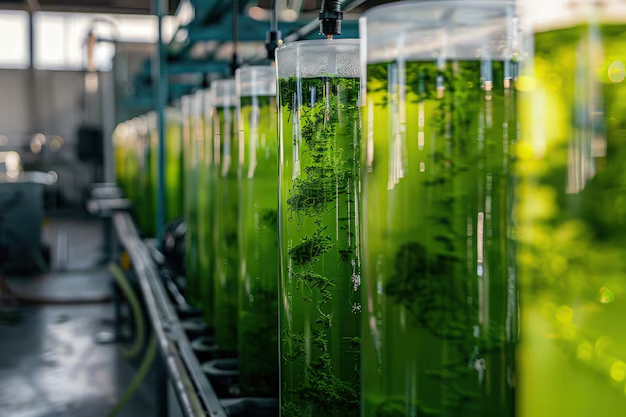
Macroalgae (seaweed) and some microalgae grown in commercial scale produce biomass for production of biofuel, chemicals in food processing, cosmetics and pharmaceuticals, soil additives and fertilizers, animal feed, and other products (DoE 2019). Algae has competitive advantages over traditional crops because land, fertilizers and irrigation are not required. Farms dedicated to growing algae for human and animal consumption are common, but crop production for biofuels remain experimental. Large-scale growth and harvest at sea would resemble aquaculture operations with power for safety, navigation and maintenance, pumps for nutrients and ballast, refrigeration and ice production, charging for underwater vehicles and transport vehicles, and drying and sensor equipment. Renewable marine energy systems could be developed and integrated to replace fossil fuels—reducing harm to air and water quality, supply chain risks, and operation costs.
Biogas Pretreatment and Production
Energy security in the transition to sustainable development is a critical challenge to the global industry. Anaerobic digestion offers a promising low-risk solution for biogas production to yield methane (Anacleto 2024). Marine algae are fast growing, require minimal input, and do not require land with good potential as feedstock for bioethanol production, though its complex cell structure necessitates pretreatment before fermentation into bioethanol (Sulfahri 2020). Standard processes use costly acids and generate hazardous waste, while ozone pretreatment is an environmentally friendly alternative that does not produce these dangerous compounds and outperforms acid pretreatment.
Energy Generation from Biomass
Biomass is an abundant and affordable source for power generation, capable of replacing fossil fuels. Hydrothermal and physicochemical processes convert biomass into sustainable fuels and bioproducts (Issaka 2025). Primary and secondary biofuels are derived from edible and non-edible crops, while tertiary biofuels utilize algae as feedstock. Inexpensive, greener fuels, and net-zero emissions fulfill efforts toward energy transition. Algal biomass offers significant potential in energy production, dependent on pretreatment optimization, cultivation and conversion processes. Encouraging implementation through government regulation, subsidies and carbon credits will establish biorefinery infrastructure and reduce greenhouse gas (GHG) emissions.
References
Anacleto, Thuane; Soares, Nathália & de Lelis, Diego-Caetano. (2024). Opportunities for biogas production from algal biomass. Biofuels, Bioproducts & Biorefining. 19: 163-173. DOI: 10.1002/bbb.2702.
Issaka, Eliasu; Danso-Boateng, Eric; Fazal, Adnan; Melville, Lynsey & Adams, Mabruk. (2025). Algae biomass for energy generation: a comprehensive review of recent advances, mechanisms and bottlenecks. Sustainable & Green Materials. 1:2-4, 32-94, DOI: 10.1080/29965292.2025.2515823.
Marine Algae. (2019). Powering the Blue Economy: Exploring Opportunities for Marine Renewable Energy in Maritime Markets. US Department of Energy: Office of Energy Efficiency & Renewable Energy.
Sulfahri; Mushlihah, Siti; Langford, Alexandra & Tassakka, Asmi Citra. (2020). Ozonolysis as an Effective Pretreatment Strategy for Bioethanol Production from Marine Algae. BioEnergy Research. 13: 1269-1279. doi.org/10.1007/s12155-020-10131-w.