
Summary
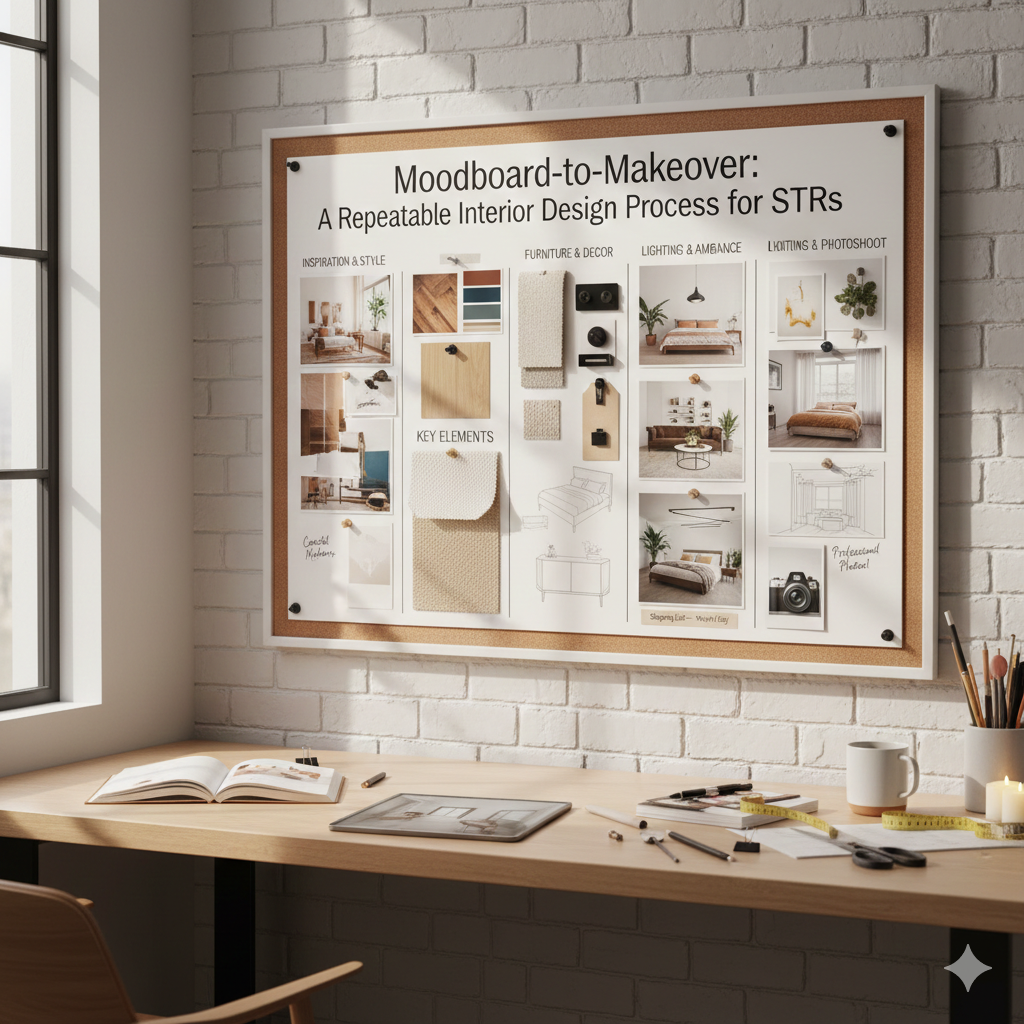
- “Moodboard-to-Makeover: A Repeatable Interior Design Process for STRs” is a streamlined approach designed for short-term rental (STR) properties.
- It focuses on using moodboards as a visual starting point to define the style, color palette, and atmosphere. This process ensures that interior design transformations are both efficient and cohesive.
- By following a repeatable method, designers can create personalized, attractive spaces that enhance the guest experience while keeping costs and timelines manageable. The goal is to make design decisions simpler and more impactful for STR owners.

Interior Design Process
The world of short-term rentals (STRs) has surged in popularity over the last decade, with travelers opting for unique and personal accommodations rather than traditional hotels. STRs provide an opportunity for property owners to design spaces that stand out, cater to niche markets, and offer distinctive experiences. A prime example of this is the “artist cottage” concept, inspired by creative hubs like Woodstock, where travelers are drawn not just to the accommodation, but to the atmosphere and story behind the space. Interior design for these types of rentals must be both functional and evocative, creating an immersive environment for guests while also appealing to the practical needs of short-term rental hosts.
The process of transforming a rental property into a standout STR can be intimidating without a clear and repeatable design approach. This is where the Moodboard-to-Makeover approach can be invaluable. It is a methodical, yet creative, way of converting abstract design ideas into a visually cohesive and functional space. In this guide, we will explore how this process can be applied to the interior design of an artist cottage in a place like Woodstock or other artistic communities, making it a repeatable framework that enhances the appeal and success of STRs.
The Power of a Moodboard in Interior Design
Before diving into the specifics of the design process, it is important to understand the concept of a moodboard. A moodboard serves as a visual representation of the design direction, setting the tone for the entire project. It helps translate abstract ideas into concrete imagery and is crucial for guiding decision-making throughout the process.
For STRs, a moodboard should be more than just an assortment of colors and textures. It must reflect the essence of the experience you want to create for your guests. For example, an artist cottage in Woodstock would require a moodboard that conveys creativity, comfort, and the bohemian vibe that the area is known for.
Key Elements to Include in Your Moodboard
- Color Palette: Select colors that evoke the mood you wish to create. For an artist cottage, earthy tones like terracotta, deep greens, and rich browns could work well, paired with vibrant accents like mustard yellows or cobalt blues.
- Textures: Consider the tactile elements that will make the space feel inviting. Rustic wood, woven fabrics, and natural stone all bring warmth and authenticity, fitting for an artistic, cozy atmosphere.
- Furnishings and Fixtures: Choose pieces that reflect both the aesthetic and functionality required in a short-term rental. Vintage furniture, reclaimed wood tables, and functional yet unique lighting can add character and appeal to the space.
- Art and Decor: Integrating artwork or decor that aligns with the theme of the cottage, such as local paintings, hand-crafted pottery, or vintage finds, will enrich the space’s narrative and connect it to its surroundings.
The goal of the moodboard is to create a cohesive visual reference that helps in the decision-making process and sets the tone for each design choice. It ensures that all elements from furniture selection to color schemes work together to create a harmonious experience for the guest.
Translating the Moodboard into a Functional Design Concept
Once the moodboard is established, the next step is translating those visuals into a functional design concept that meets the practical needs of a short-term rental. This step ensures that while the design may be aspirational and immersive, it is also geared toward making the space comfortable and convenient for guests.
Functionality Meets Design
- Space Planning: STRs often have limited space, so efficient layout planning is crucial. Consider how the flow of traffic within the space will allow guests to move easily between different areas, such as the kitchen, bedroom, and living room. Think about how furniture placement can create intimate spaces while maintaining an open feel.
- Multifunctional Furniture: In small or less traditional STRs like an artist cottage, every piece of furniture must serve a dual purpose. For example, a vintage desk could double as a vanity or writing station, while a sofa bed can easily accommodate additional guests.
- Storage Solutions: It’s important that guests have access to ample storage, especially if the space is designed for longer stays. Create clever storage solutions like built-in shelves, under-bed drawers, or open shelving to store personal items without compromising on style.
For an artist cottage, the balance between functionality and creativity is key. The space should feel like an inspiring retreat while still providing all the necessary comforts, such as functional lighting, comfortable seating, and clear zones for different activities.
The Role of Local Culture and Environment in the Design
When designing a space like an artist cottage Woodstock or a similar creative haven, it is essential to infuse the design with elements of local culture and the environment. This helps create an authentic experience for guests and ties the interior design to its surrounding community. Woodstock, known for its vibrant art scene and historic charm, serves as the perfect backdrop for an eclectic, art-inspired interior.
Elements to Consider
- Local Materials: Use locally sourced materials, such as wood from nearby forests or pottery made by local artisans, to create a unique and sustainable atmosphere. This not only supports the local economy but also gives guests a deeper connection to the region.
- Art and Artifacts: Showcase works from local artists, whether it’s paintings, sculptures, or hand-crafted objects. These pieces not only enhance the space but also provide guests with a deeper cultural experience. Consider rotating artwork seasonally to keep the space fresh and exciting.
- Architectural Features: Embrace the architectural quirks of the space, such as exposed beams, brick walls, or unique window designs. In an artist cottage, these elements should be highlighted and treated as integral parts of the design narrative.
Incorporating elements of the local culture into the design gives the space a sense of place and purpose, which can create a more enriching and memorable experience for guests.
Creating an Immersive Experience for Guests
The ultimate goal of interior design for STRs is to create an immersive experience for the guests that goes beyond just aesthetics. The space should feel like a sanctuary, offering both comfort and a sense of discovery. When designing an artist cottage or similar vacation rental, the experience should evoke a sense of retreat, creativity, and personal connection.
Sensory Design
- Lighting: Lighting can dramatically influence the mood of a space. For an artist cottage, layering different light sources such as table lamps, pendant lights, and floor lamps can create a cozy, welcoming ambiance. Consider adjustable lighting to set different moods, from bright task lighting to soft, atmospheric lighting for evening relaxation.
- Sound: Thoughtfully placed music systems or soundproofing solutions can add to the ambiance. Woodstock, known for its music history, can inspire a subtle integration of sound, like providing guests with a vinyl player or a curated playlist to enhance the atmosphere.
- Smell: Scent is an often-overlooked element of design, but it has a strong impact on guest satisfaction. Consider incorporating aromatic candles, essential oils, or fresh flowers that evoke a calming atmosphere and connect guests to the natural surroundings.
Personal Touches
- Welcome Packages: Consider leaving a small gift for guests upon arrival, like a local handcrafted item, a bottle of local wine, or a notebook for sketching. These personal touches enhance the sense of place and hospitality.
- Customizable Elements: Allow guests to personalize their stay by providing art supplies, a small gallery wall they can contribute to, or even a designated space for guests to engage in creative activities.
Maintaining and Updating Your STR Design
Creating a beautiful and functional interior design for an STR is an ongoing process. Unlike long-term homes, short-term rentals are subject to frequent use, and therefore, maintenance and updates are crucial to keeping the space fresh, clean, and inviting for new guests.
Tips for Ongoing Success
- Regular Cleaning and Maintenance: Ensure that all furniture, appliances, and fixtures are regularly cleaned and maintained. Guest reviews often reflect the condition of the space, so keeping everything in working order is essential for your success.
- Seasonal Refreshes: Change up the decor periodically to keep the space exciting for repeat guests. A few new throw pillows, updated art, or fresh plants can keep the mood of the space dynamic and evolving.
- Guest Feedback: Listen to guest reviews and take note of any suggestions or complaints regarding the design or functionality of the space. Often, guests will provide valuable insights that can help you refine the design over time.
By making updates and improvements regularly, you can ensure that your STR remains competitive and continuously appealing to new guests.
Conclusion
The Moodboard-to-Makeover process for interior design in STRs provides a structured yet creative approach that helps hosts transform an ordinary rental into an extraordinary space. When designing an artist cottage, like those in Woodstock or other artistic locales, blending creativity with functionality, and infusing local culture and environment into the design, ensures that the space becomes more than just a place to stay. It becomes an immersive experience for guests that they’ll remember long after they check out.
By following a repeatable process from creating an inspirational moodboard to executing a well-thought-out, immersive design you can elevate your STR and maximize its potential for success. Not only will this approach help you create a space that is visually appealing, but it will also make the design process more efficient, sustainable, and ultimately rewarding for both you and your guests.